The Crimson Combination of Blade and Lacquer
Jan 19, 2026
「EP.105」 鎌倉彫
KAMAKURA BORI
Kanagawa Prefecture
「transcript」
When Zen Buddhism arrived from Song-dynasty China, it introduced carved lacquerware such as tsuishu and tsuikoku, made by layering thick lacquer and carving into it. These works strongly influenced Buddhist sculptors in Kamakura.
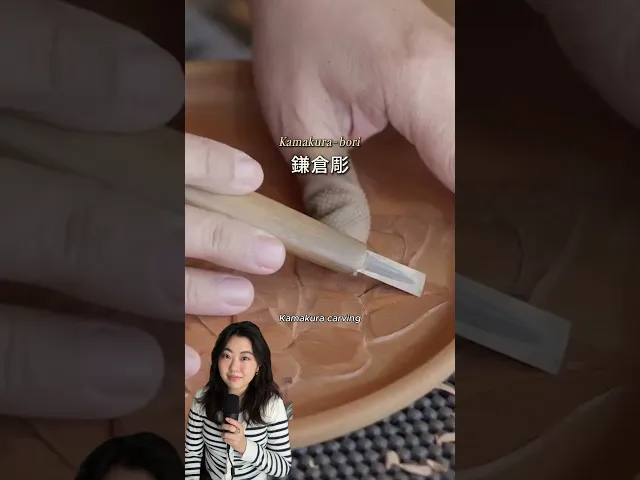
Japanese artisans soon took a different approach. Instead of carving lacquer layers, they carved bold motifs directly into katsura or ginkgo wood, then applied lacquer over the surface. This reversal became the foundation of Kamakura-bori.
To make this, wood is dried for up to a year, shaped, carved with precise angles, and finished through more than thirty lacquer coating and polishing steps.
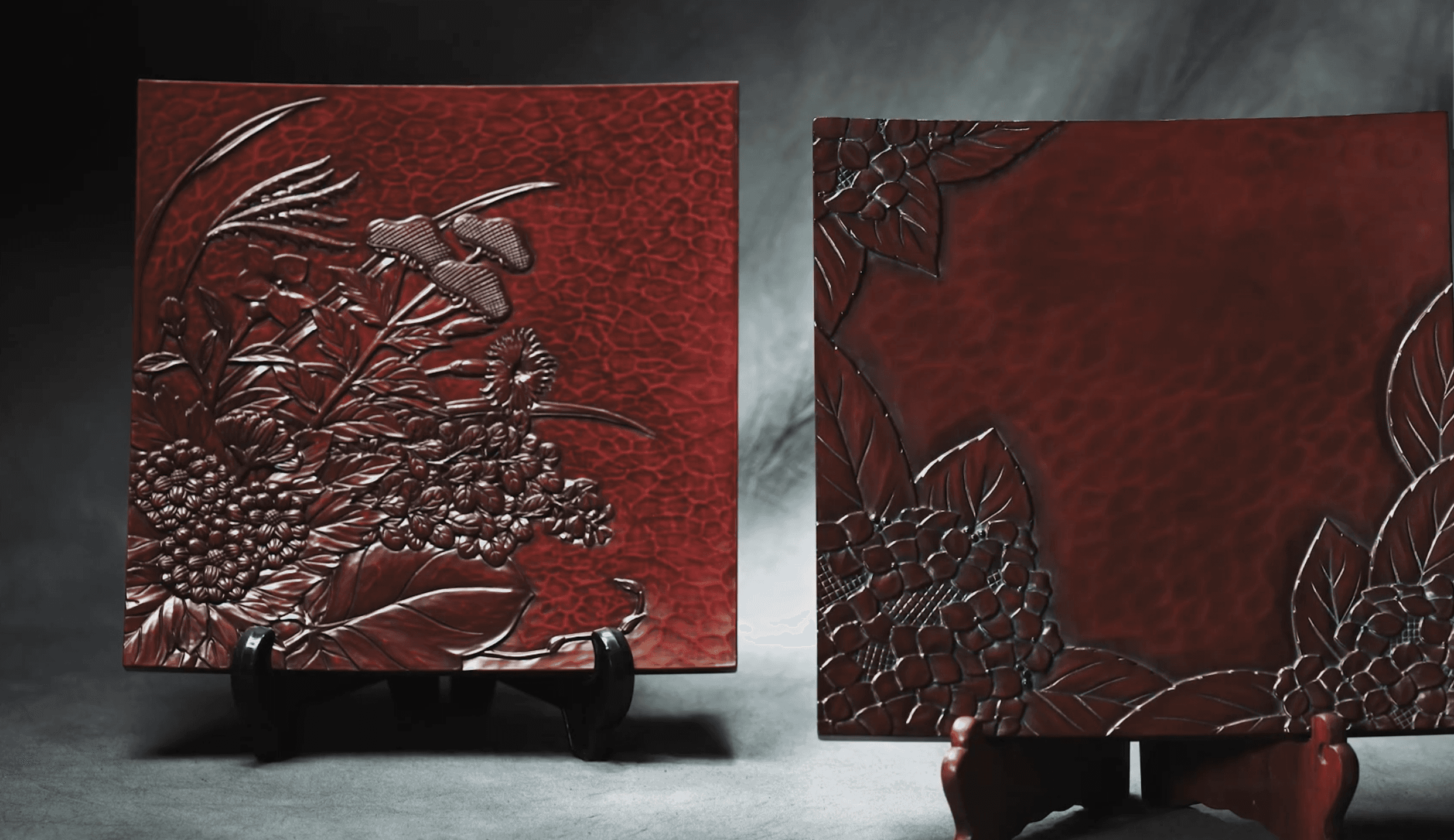
Its defining feature is the carving itself. Artisans deliberately leave knife marks on the background, allowing light and shadow to create depth. Lacquer techniques such as makomo-maki soften the surface, giving Kamakura-bori its aged, sculptural character.
Today, Kamakura-bori is valued as both functional tableware and interior art. Its bold carving, warm lacquer tones, and visible traces of the hand continue to resonate in a world of mass production. Recognized as a national traditional craft in 1979, it continues to evolve while remaining true to its sculptural roots.
*The assets featured here are the work of their rightful creators, credited below
「sources & assets」
https://www.youtube.com/watch?v=RmxiG9X0AHg
https://www.youtube.com/watch?v=rld1Z-Xw27w
https://www.youtube.com/watch?v=RVcdpZBQGcs
https://www.youtube.com/watch?v=Uet0f6OHg54
https://kogeijapan.com/locale/ja_JP/kamakurabori/
https://www.city.kamakura.kanagawa.jp/shoukou/kamakurabori.html
https://www.kamakurabori-kougeikan.jp/鎌倉彫について/
https://www.kamakurabori-azabu.jp/flow.php