
The Sound of the Ryukyu Islands
Jan 30, 2026
「EP.108」
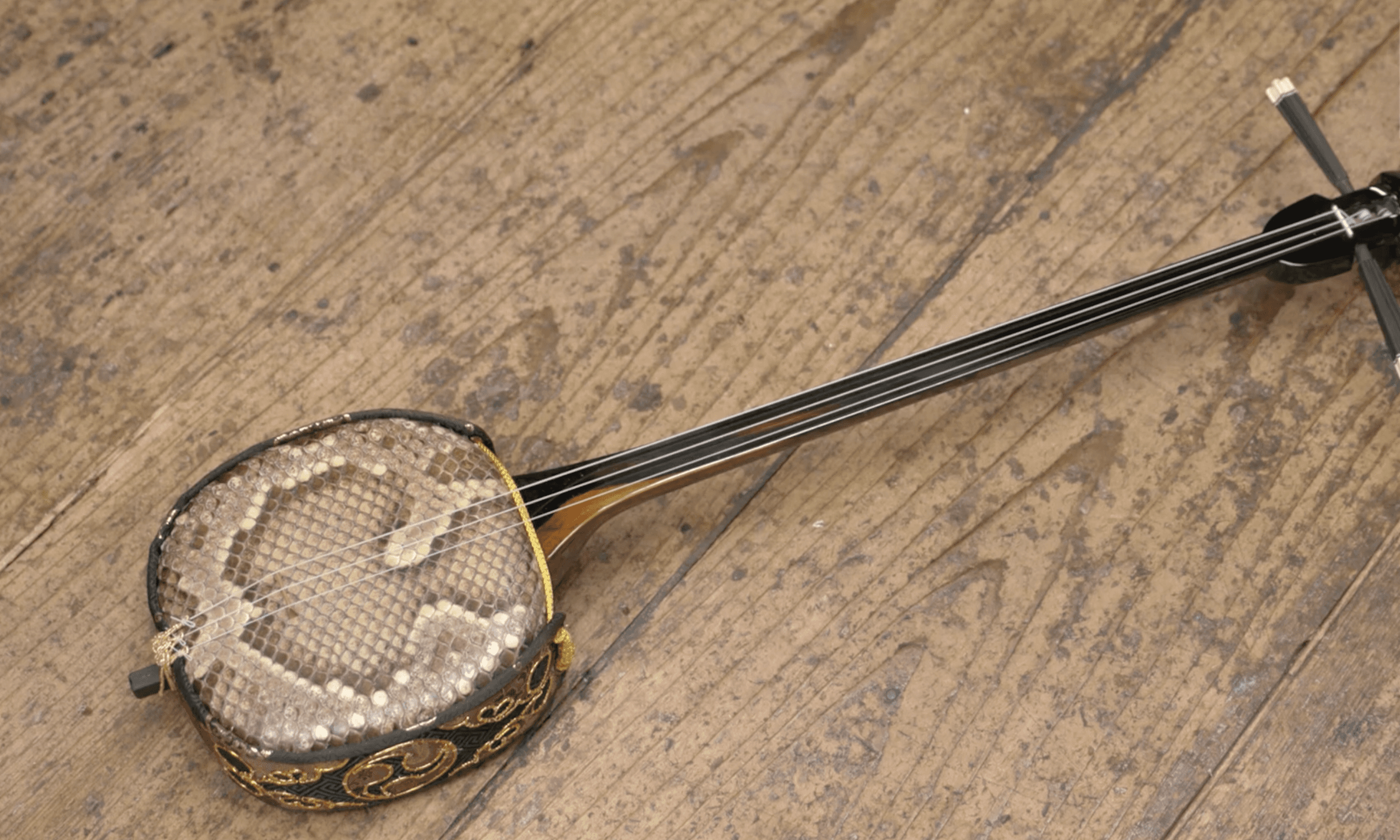
SANSHIN
Okinawa Prefecture (Ryukyu)
「transcript」
In the late 14th century, the Ryukyu Kingdom thrived as a maritime hub linking Japan, China, and Southeast Asia. Through trade with China’s Fujian region, the ancestor of the Sanshin, the sansian, reached the islands and evolved into a distinctly Ryukyuan instrument.
By the early 1600s, the Sanshin was established as an official court instrum ent for ceremonies and diplomatic receptions, and after the kingdom’s dissolution in 1879, it became woven into everyday life through festivals and gatherings.
The neck is carved from dense hardwoods such as Okinawan black ebony (kuruchi), isunoki, or mokumaou. Prized for their strength and resonance, these woods are often dried for ten to twenty years before shaping.
The Sanshin’s body is traditionally covered with python skin imported from Southeast Asia, reflecting Ryukyu’s history as a crossroads of trade. The skin is stretched on both sides, with wedges used to fine-tune tension before the neck and body are joined.
Today, the Sanshin remains central to classical Ryukyuan music, folk songs, dance, and theater, while also appearing in modern pop and contemporary Okinawan music.
*The assets featured here are the work of their rightful creators, credited below
「sources & assets」
https://www.youtube.com/watch?v=BXmTnZm2j-I
https://www.youtube.com/watch?v=2nBqN1gOj7w
https://www.youtube.com/watch?v=m12LeFMu3kU
https://www.youtube.com/watch?v=EUKtbvbLinc
https://www.youtube.com/watch?v=_VNa0typJIE
https://www.youtube.com/watch?v=lTxt_9eZStY
https://kogeijapan.com/locale/ja_JP/sanshin/
https://kougeihin.jp/craft/1420/
http://www.sanshin-koubou.com/process.html
https://ks-sanshin.com/三線(さんしん)の歴史とルーツを紹介│沖縄に/
https://www.gov-online.go.jp/hlj/ja/september_2025/september_2025-05.html