
Japan’s Softest Secret
Feb 9, 2026
「EP.111」
OUMI MAWATA
Saga Prefecture
「transcript」
Silk reached Japan around two thousand years ago and became a foundation of Japan’s economy for centuries. By the mid-Edo period, Maibara’s Iwawaki (米原, 岩脇) area had grown into a major mawata-producing region, supported by limestone-filtered spring water ideal for silkworm cultivation. At its peak, nearly 70 percent of local households were involved in mawata production.
Mawata begins with boiling silkworm cocoons to soften the silk. Each cocoon is opened in cold water, the pupa removed, and the silk stretched until nearly transparent. This delicate work relies entirely on hand control. Too much force tears the silk, too little creates uneven thickness. Even an experienced artisan stretching over a thousand cocoons a day can produce only a small portion of one futon.
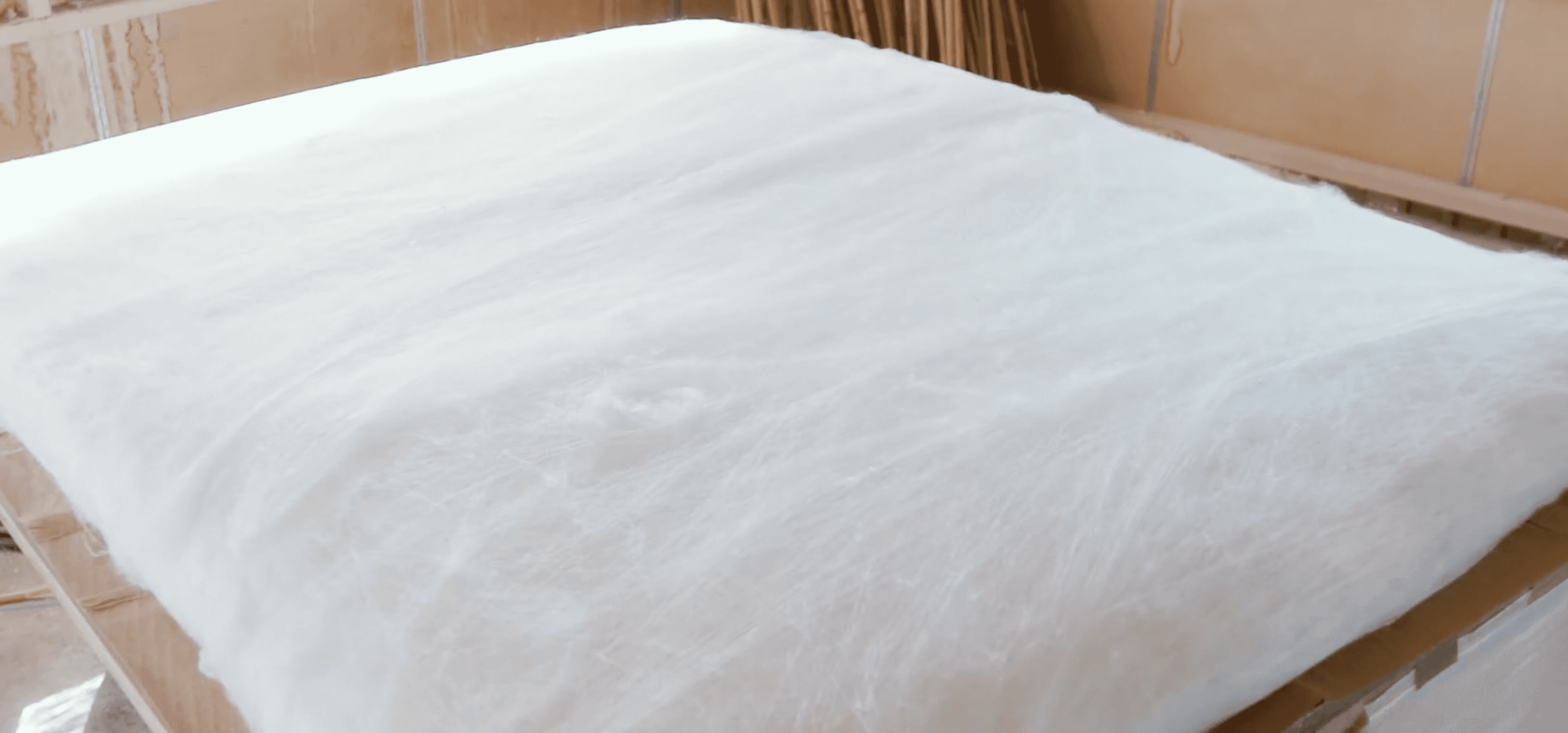
To make futon filling, two craftsmen stretch and layer the silk together hundreds of times. A single futon requires between 3,000 and 8,000 cocoons and hours of perfectly synchronized work.
The finished mawata futon is exceptionally light yet warm. Fine air layers trap heat, while silk’s natural moisture regulation keeps it breathable year-round. It also resists dust, static, odors, and bacteria.
*The assets featured here are the work of their rightful creators, credited below
「sources & assets」
https://www.youtube.com/watch?v=i4-V_EznipY
https://www.youtube.com/watch?v=Mz6qyFZGg0s
https://www.youtube.com/watch?v=HhU4Pi_D5J0
https://www.youtube.com/watch?v=KcwgNTIE4K8
https://www.youtube.com/watch?v=yE96T9rASCY
https://www.hanakaido.co.jp/megurushiga/learning/1891/
https://intojapanwaraku.com/rock/craft-rock/139693/
https://www.maff.go.jp/kinki/tiiki/otsu/photo/20251030.html
https://www.shiga-bunkazai.jp/shigabun-shinbun/best-place-in-shiga/新近江名所圖會