The Fan Containing Washi Art
May 11, 2026
「EP.129」京うちわ
THE FAN CONTAINING WASHI ART
Kyoto Prefecture
「transcript」
What makes Kyo-Uchiwa unlike any other fan is that the fan and the handle are made completely separately and only joined at the very end.
That process is called sashi-e. And it's been done this way since the Edo period.
It traces back to the 14th century, when fans from the Korean peninsula reached Japan and evolved in Kyoto into Miyako Uchiwa, prized by court nobles for their elegance.
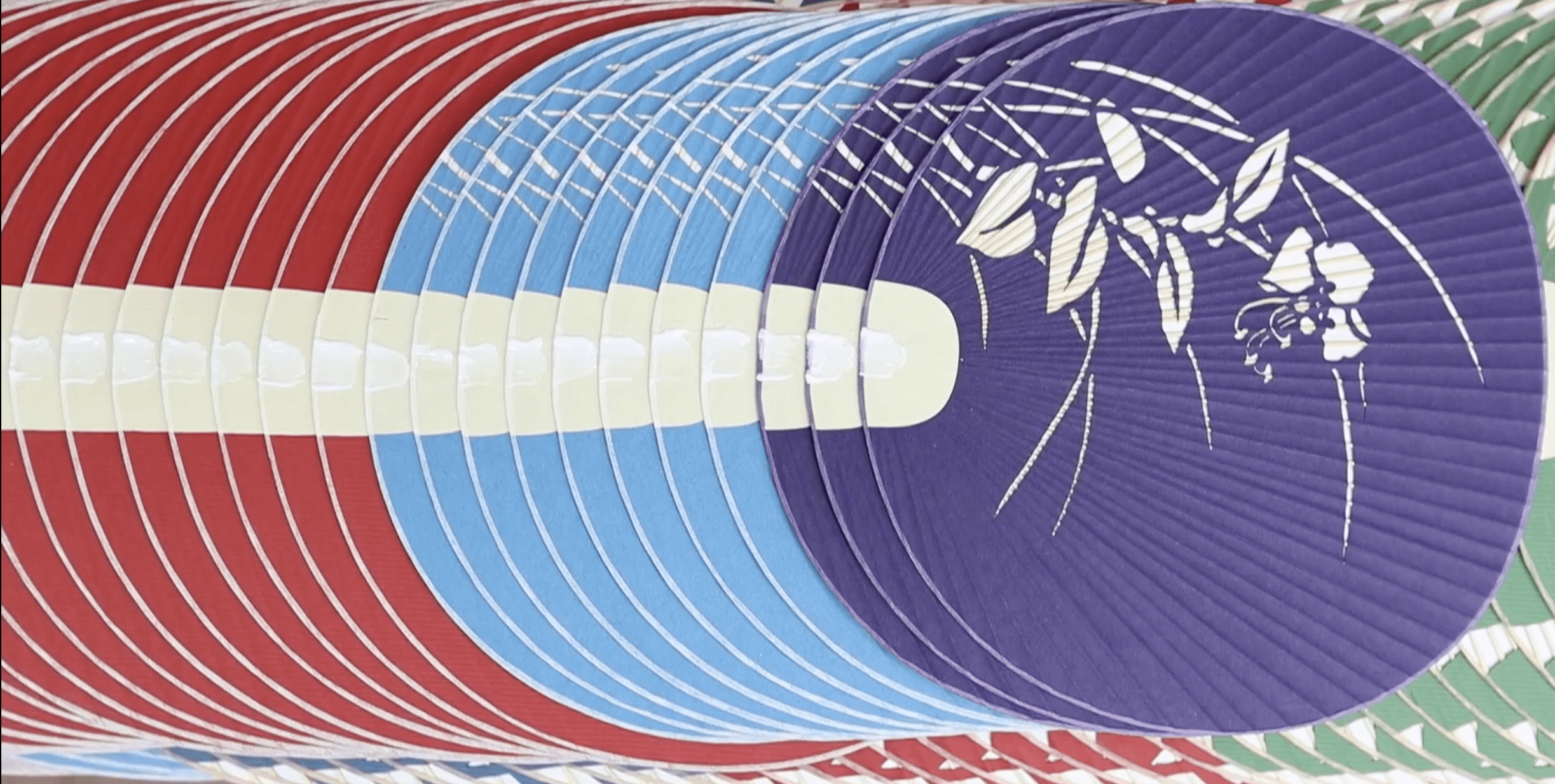
Each fan is built from 50 to 100 bamboo ribs, cut, split, and shaved into delicate ribs, then arranged into a radial pattern and fixed onto handmade washi paper.
The more ribs, the higher the value.
A 100-rib fan is fully functional but so refined and beautiful that most end up as display pieces.
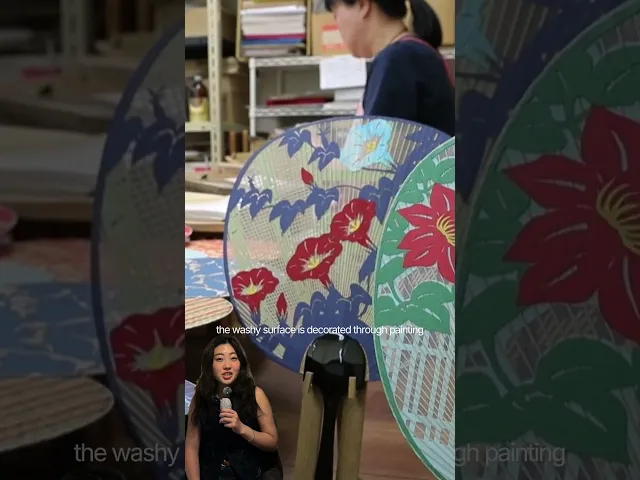
The washi surface is decorated through painting, printing, or dyeing often resembling traditional Japanese art.
The ribs and paper are then layered, dried, and shaped through nen-tsuke (粘付け) refining the fan's flexibility and setting its curve. Then the handle is inserted last.
Bamboo or lacquered wood depending on the tier.
Today Kyo-Uchiwa is no longer just for cooling. It has become an interior piece, a seasonal decoration, and a gift symbolizing good fortune, often displayed in homes across Kyoto.
*The assets featured here are the work of their rightful creators, credited below
「sources & assets」
https://www.youtube.com/watch?v=rmii7RNtMAs
https://www.youtube.com/watch?v=LqSKm32JjwA
https://www.youtube.com/watch?v=TSvSuswESUo
https://www.youtube.com/watch?v=PM7_iw2YtQk
https://www.youtube.com/watch?v=lGQ4JUOjBaA
https://kogeijapan.com/locale/ja_JP/kyouchiwa/
https://sensu-uchiwa.or.jp/w/whatis/
https://www.utiwaya.com/column/kyou
https://www.kyotoshiki.jp/traditional/uchiwa/
https://artsandculture.google.com/story/9wUBmVa4iH4rIQ?hl=ja