A Dialogue Between Silk and Light
Nov 7, 2025
「EP.87」 京繍
KYO-NUI
Kyoto Prefecture
「transcript」
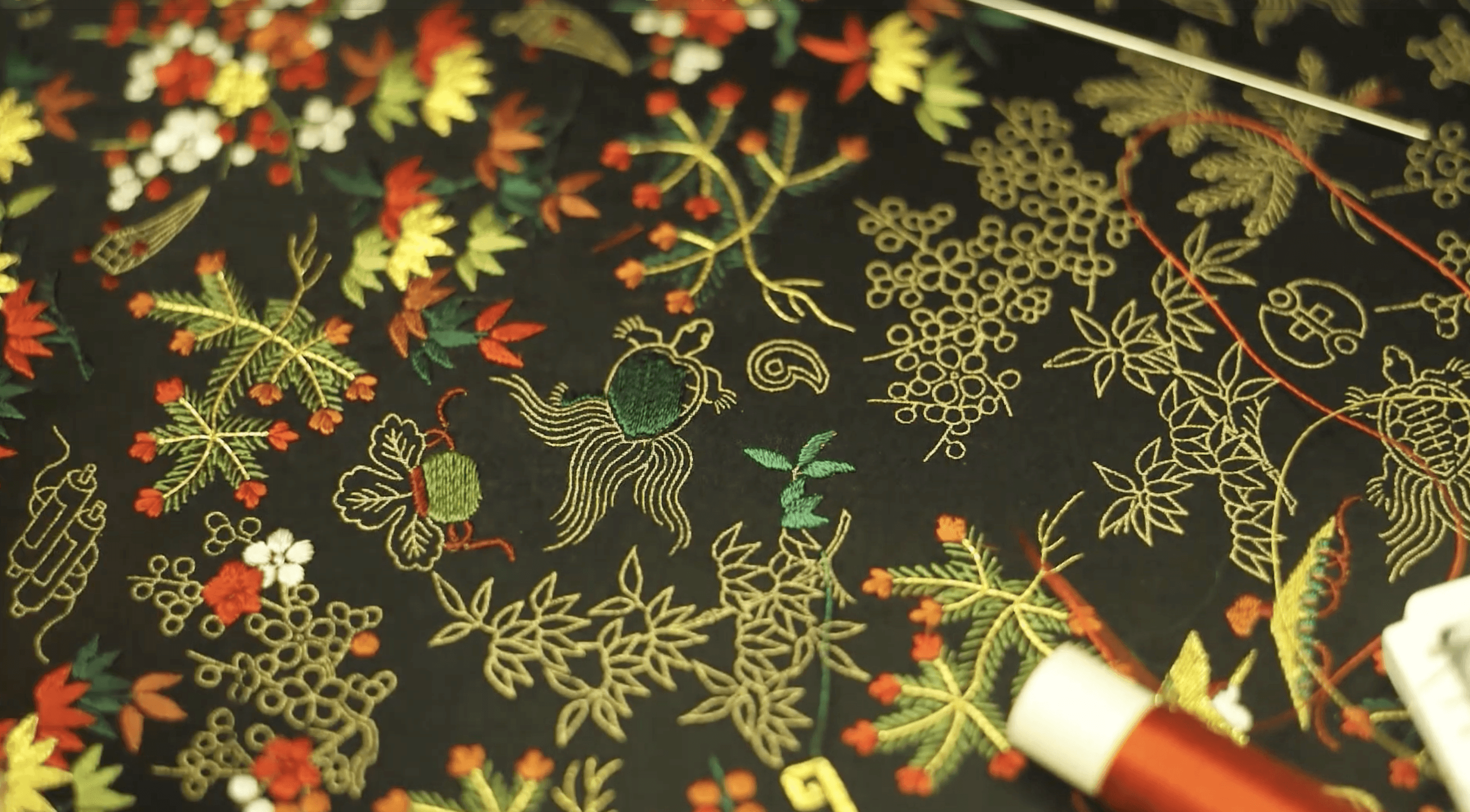
Japanese embroidery began 1,400 years ago in the Asuka period, when Buddhist images were first stitched in thread. By the Heian era, Kyoto’s imperial court elevated it into an art form, with Oribenotsukasa overseeing embroidered robes and Noh costumes.
Over the centuries, the craft spread from nobles to samurai and merchants, and by the Meiji era, Kyoto’s works were celebrated abroad as “needle paintings.”
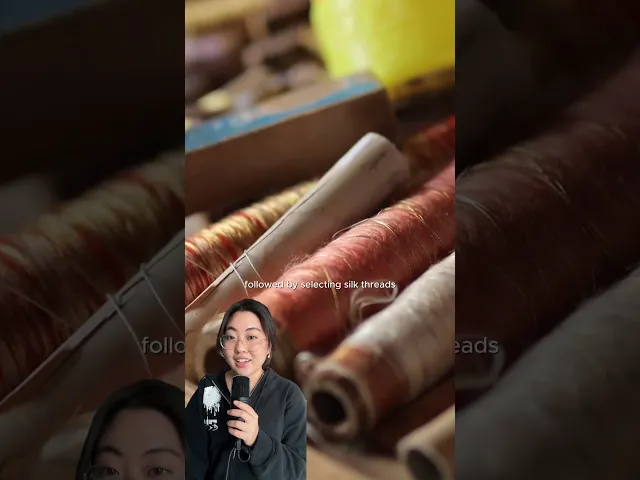
Kyo-Nui demands precision and patience. It begins with sokō, a design transferred to fabric, followed by selecting silk threads, often 20 to 30 shades from over 2,000 colors. Each thread is hand-twisted to create the intended depth and sheen for each piece.
Using both hands, artisans guide the needle through more than 30 stitch types, from wari-nui to kiri-nui. The needles are also specialized for each fabric, spanning to over 15 varieties.
Today, only a few workshops remain, producing kimono, obi, and restoring treasures like Gion Festival textiles. Beyond garments, Kyo-Nui now enhances art, bags, and interiors. With workshops bringing in new talents, this timeless dialogue between silk, light, and the artisan’s heart continue to shine.
*The assets featured here are the work of their rightful creators, credited below
「sources & assets」
https://www.youtube.com/watch?v=WYTQTE6Phws
https://www.youtube.com/watch?v=U4Ir1i9H9Qc
https://www.youtube.com/watch?v=SfoEu1xCX8I
https://www.youtube.com/watch?v=yUKg6mM-pgg
https://kogeijapan.com/locale/ja_JP/kyonui/
https://artsandculture.google.com/story/KwVRCgV-ihndKQ?hl=ja