
EP.132 · Hakata ningyo · Fukuoka
The Doll With a Soul
The story starts in 1600, when Kuroda Nagamasa built Fukuoka Castle and brought in artisans from across the country.
The story starts in 1600, when Kuroda Nagamasa built Fukuoka Castle and brought in artisans from across the country. From their work came the first clay dolls of Hakata. By the Meiji era it had become one of Japan's defining dolls, and the name "Hakata Ningyo" was formalized in 1890.
Each doll starts with local clay, pressed into plaster molds and hollowed from the inside so it fires evenly at around 900 degrees. No glaze.
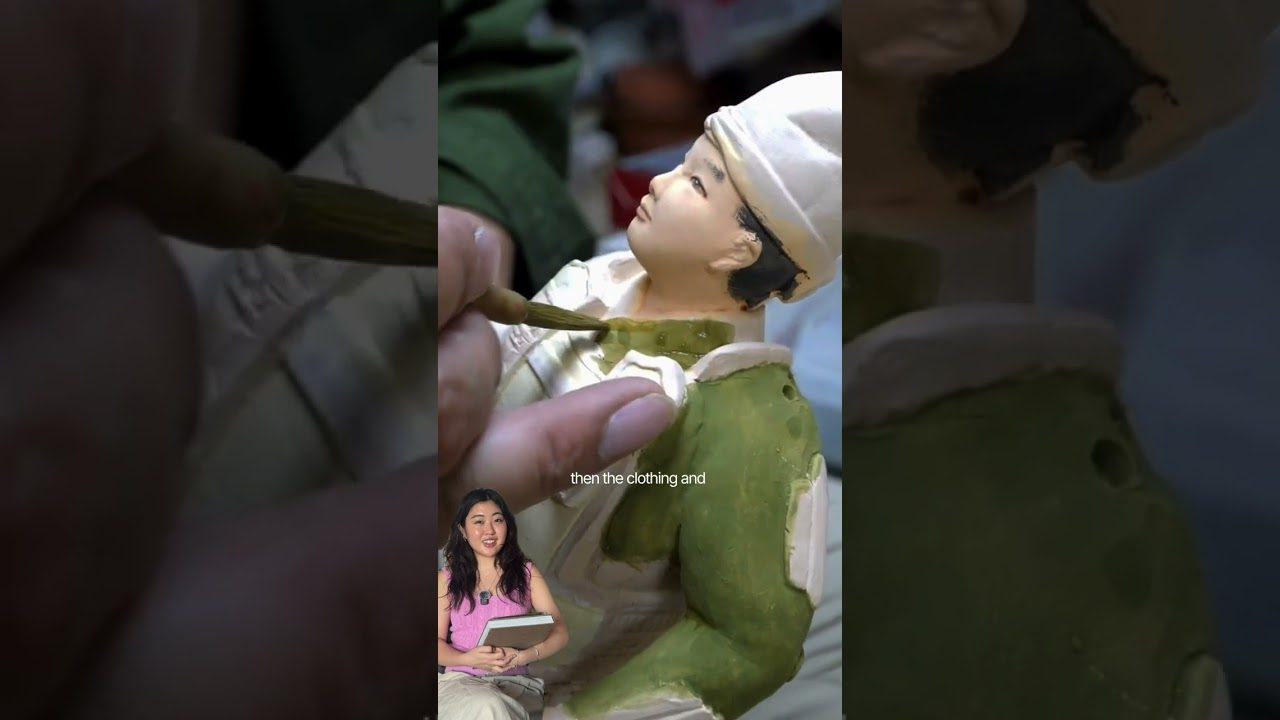
Then the skin is built up with gofun (胡粉), a white pigment from ground oyster shell, layered many times to create that signature soft complexion. The clothing and patterns are painted on top.
But the final step is the one that matters. It's called menso (面相). Lips, eyes, eyebrows, all done with a fine brush in a single take. From memory. No drafts.That's the moment the doll comes alive. It's also why becoming a Hakata Ningyo artisan takes ten years of training before you're allowed to paint a face on your own.
Today the craft has expanded beyond bijin (美人) and noh (能) themes into pop culture, modern characters, and large-scale public art across Fukuoka.
Same clay. Same brush. Same ten years.
Craft Chronicles reaches people who care about how things are actually made.
Sources
- www.youtube.com/watch?v=iFrcg11H4gs
- www.youtube.com/watch?v=Bet4i6c5bQ0
- www.youtube.com/watch?v=Axb9xVY8co4
- www.youtube.com/watch?v=70z1WsRm0dU
- www.youtube.com/watch?v=D4kknbJJ9Lk
- kogeijapan.com/locale/ja_JP/hakataningyo/
- kougeihin.jp/craft/1308/
- waknot.com/crafts/349
- hakatadolls-nishito.com/free/process
- www.hakataningyo.or.jp/about/
- kougei-expo.com/fukuoka/hakataningyo/
- www.kyushu.meti.go.jp/seisaku/seizo/dento/pdf/vol11.pdf
- nihonmono.jp/article/53436/