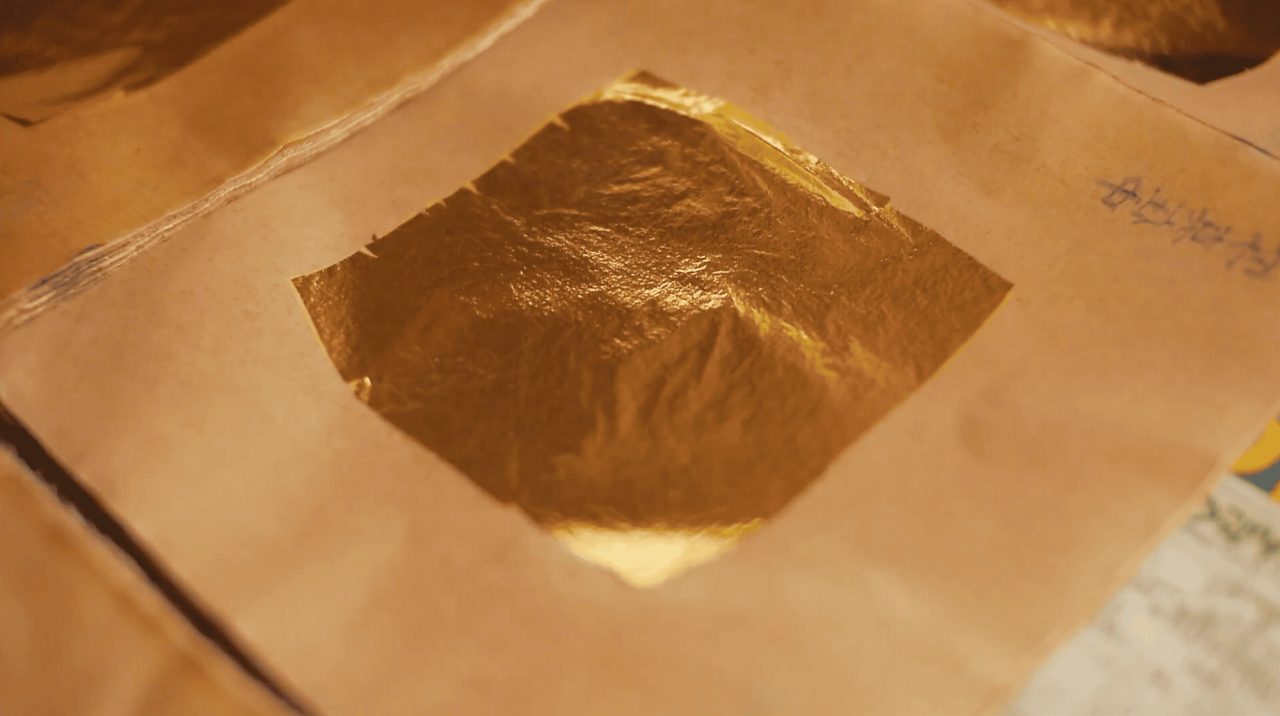
EP.100 · Kanazawa Gold Leaf · Ishikawa
The 1/10,000 mm Miracle
In 1593, Maeda Toshiie (前田利家) began gold and silver leaf production in Kanazawa, where the climate created ideal humidity for handling ultra‑thin metal.
Craft details
- Craft
- Kanazawa Gold Leaf金沢箔
- Material
- Ink and pigment
- Region
- Ishikawa
- Designation
- One of Japan's 244 nationally designated traditional crafts (METI)
In 1593, Maeda Toshiie (前田利家) began gold and silver leaf production in Kanazawa, where the climate created ideal humidity for handling ultra‑thin metal. When the Edo shogunate later banned leaf-making outside Edo and Kyoto, local artisans continued in secret, refining techniques. Now, Kanawaza supplies over 98% of Japan’s gold leaf.
The alloy is first prepared by the sumi-shokunin (澄職人). Pure gold mixed with small amounts of silver and copper is gradually rolled thinner until it becomes uwazumi (上澄), a delicate base sheet.
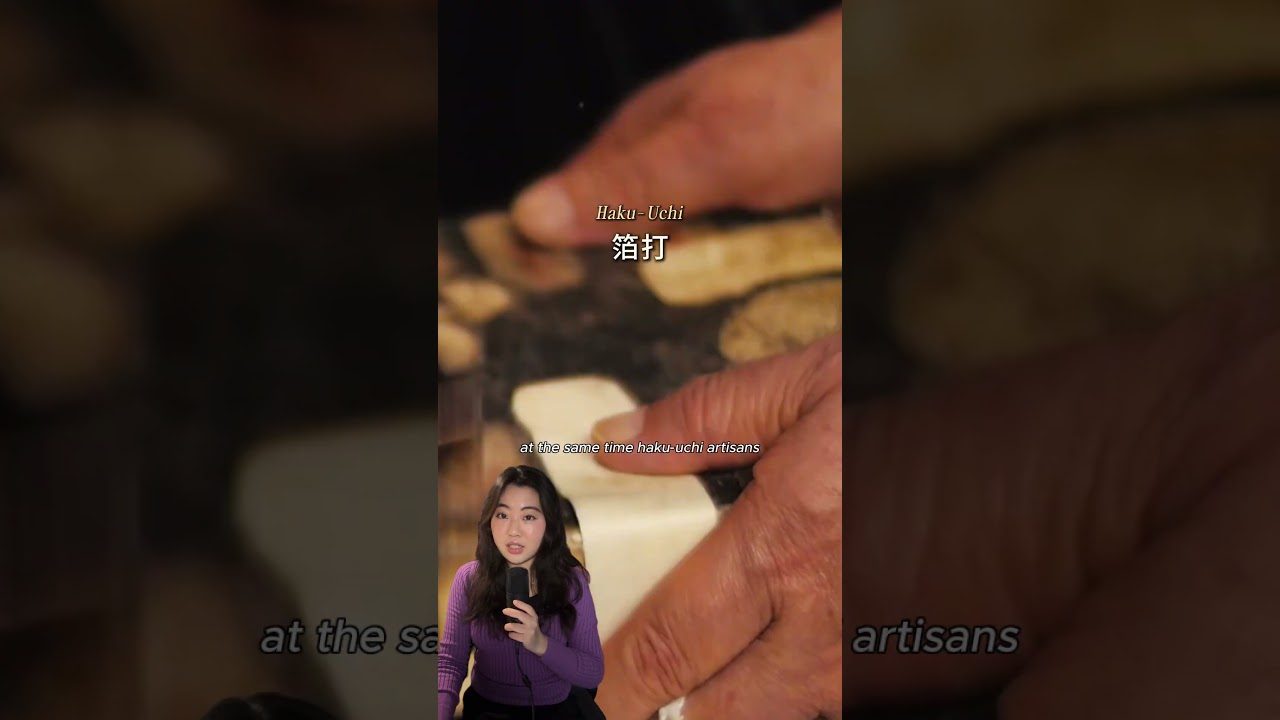
At the same time, haku‑uchi (箔打) artisans make the specialized ganpi‑fiber (雁皮) papers required for beating. The paper is dampened and struck at high speed and this is repeated many times over the course of more than four months before any gold is added. Once ready, the gold is pressed between these papers and struck until it expands to just 1/10,000 mm in thickness, so fragile that even a breath can tear it.
Kanazawa gold leaf still adorns cultural treasures and remains essential to Japanese crafts and art, continuing to find new ways to bring light into our everyday world.
Craft Chronicles reaches people who care about how things are actually made.
Sources
- www.youtube.com/watch?v=VtBLurAl7tA
- www.youtube.com/watch?v=HL-Z5n3-Z80
- www.youtube.com/watch?v=OkoGOKVIqUo
- www.youtube.com/watch?v=WE28fFeV7go
- www.youtube.com/watch?v=zirgrquAuPs
- www.youtube.com/@金沢クラフトビジネス創造機構/videos
- kogeijapan.com/locale/ja_JP/kanazawahaku/
- hakukumiai.jp/history/
- www.icnet.or.jp/dentou/national/06.html
- entsukegoldleaf.jp/method/
- www.hakuichi.co.jp/goldleaf/flow.php
- imai.kinpaku.co.jp/kanazawahaku
- www.k-katani.com/archives/459
- note.com/rpp_note/n/n792c33d1d2aa
- waknot.com/crafts/592
- www.thebecos.com/collections/kanazawahaku