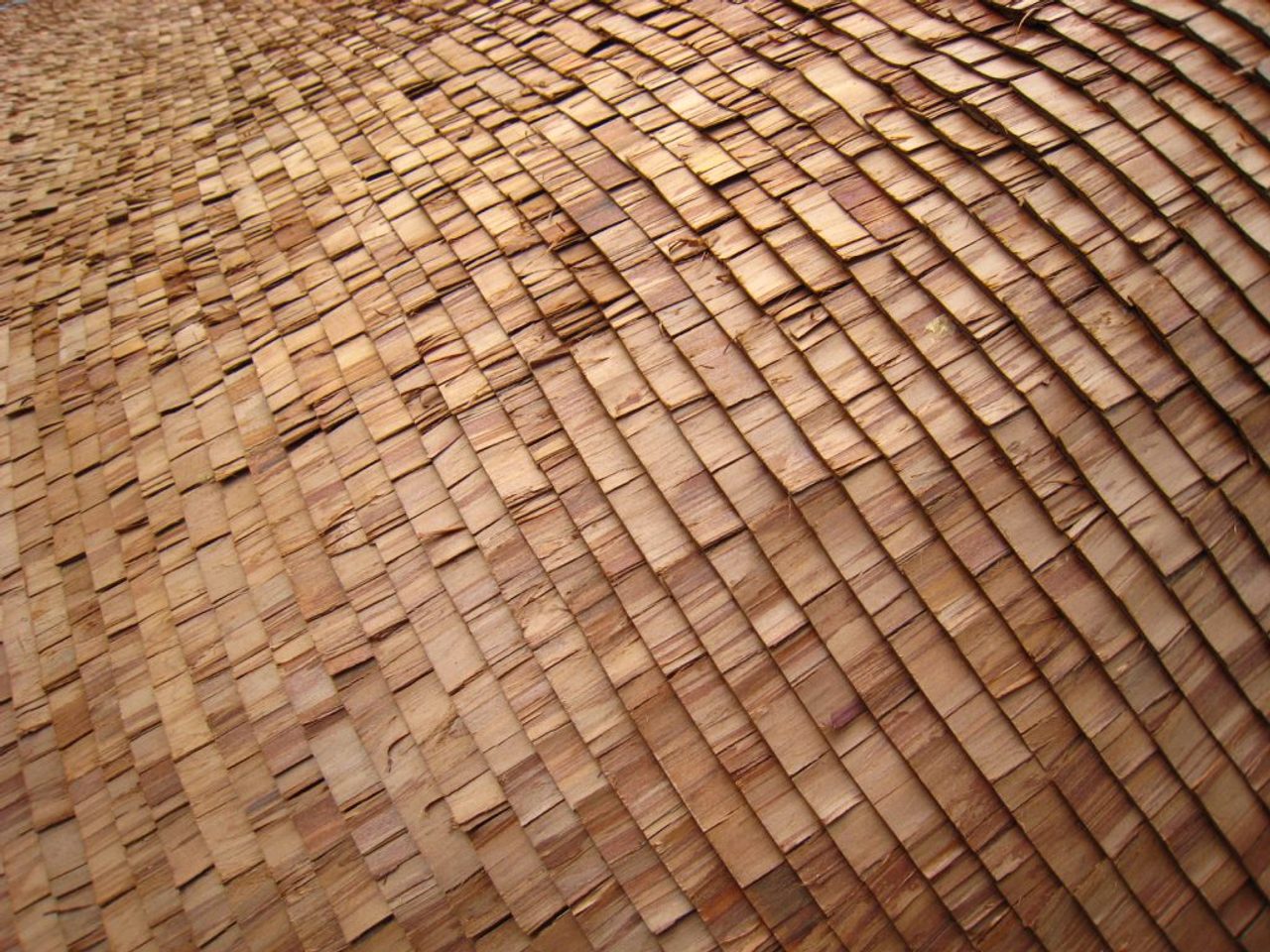
EP.152 · Hiwadabuki · Nationwide
Hiwadabuki: Roof Made Out of Tree Bark
Hiwadabuki is a traditional Japanese roofing craft using sustainably harvested cypress bark. Secured with bamboo nails, this UNESCO-recognized technique crowns historic shrines and temples.
Craft details
- Craft
- Hiwadabuki檜皮葺
- Region
- Nationwide
- Designation
- Nationally Selected Conservation Technique, selected 1976 / inscribed by UNESCO in 2020 as one of 17 traditional skills for conserving Japan's wooden architecture
Hiwadabuki: The Sustainable Art of Japanese Cypress Bark Roofing
High above the grounds of Japan’s most iconic shrines and temples sits an architectural masterpiece built entirely from tree bark. Hiwadabuki (檜皮葺) is a traditional Japanese roofing technique that utilizes layered hinoki (Japanese cypress) bark to create sweeping, organic silhouettes. Recognised by UNESCO as part of Japan's intangible cultural heritage, this 1,200-year-old craft represents one of the world's oldest forms of sustainable architecture.
What is Hiwadabuki?
Hiwadabuki is a specialized roofing method where thin sheets of cypress bark are overlappingly layered and secured using bamboo nails. Developed during the Heian period (794–1185), it became the primary roofing style for high-status structures across Japan, including the Kyoto Imperial Palace, Kiyomizu-dera, and Itsukushima Shrine.
Unlike rigid tile or metal roofing, cypress bark is flexible. This allows master artisans to shape roofs with soft, elegant curves and generous eaves that blend seamlessly into natural landscapes.
The Sustainable Harvesting Process
What makes Hiwadabuki truly unique is its zero-harm approach to nature. The bark is gathered by specialized harvesters known as motokawashi.
Zero Tree Damage: Harvesters climb mature hinoki trees (at least 80 years old) using ropes and carefully peel away only the outer layer of bark using wooden blades. The living inner trunk remains completely unharmed.
Regeneration Cycle: After harvesting, the trunk turns a reddish hue and naturally regenerates its bark over roughly 10 to 12 years. A single tree can be harvested multiple times throughout its lifecycle.
Winter Harvest: Gathering occurs exclusively between late autumn and winter when sap flow is low, minimizing any strain on the living tree.
Meticulous Craftsmanship: How Hiwadabuki Roofs Are Built
Building a Hiwadabuki roof requires extraordinary precision, patience, and specialized tools.
The process begins by cleaning, thinning, and shaping the harvested bark into uniform pieces measuring roughly 75 centimeters long. Roofers (fukishi) then lay these pieces from the eaves upward, overlapping each piece by just 1.2 centimeters. Because of this tight spacing, dozens of hidden layers sit beneath the visible surface to form a thick, waterproof shell.
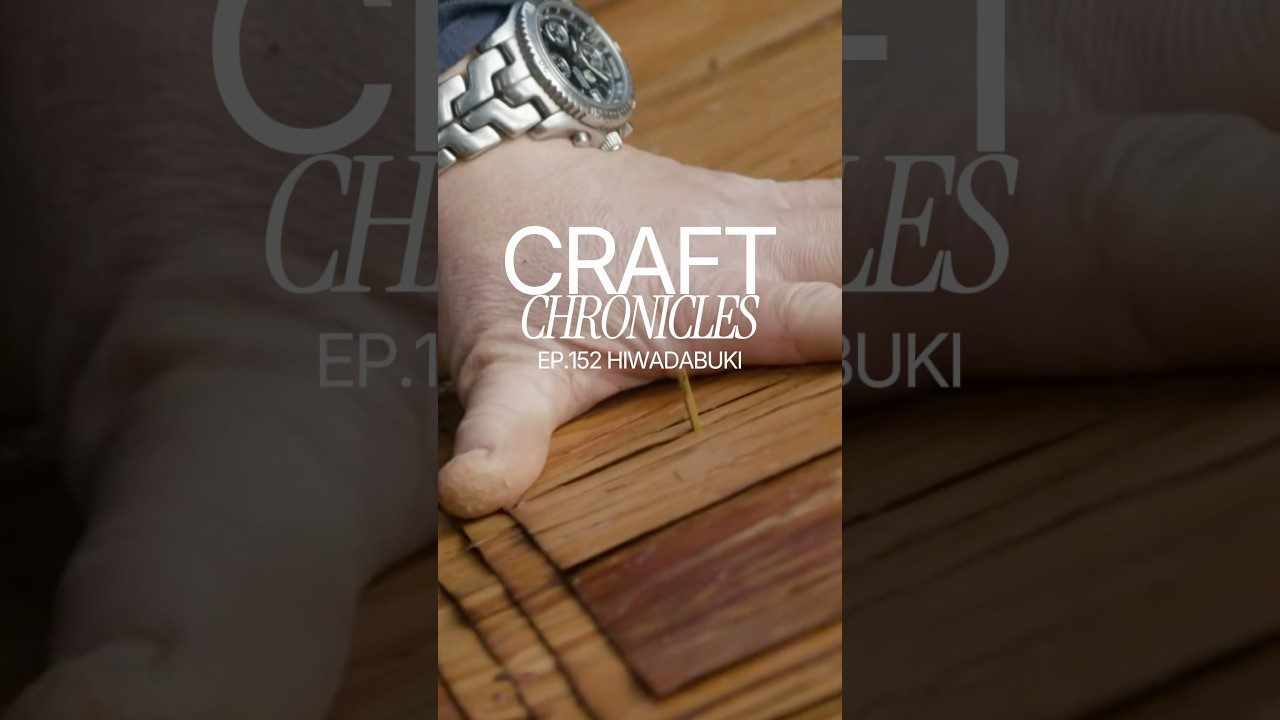
To fasten the bark, roofers use small nails carved entirely from madake bamboo. Master artisans employ a unique one-handed technique: they hold 20 to 30 bamboo nails in their mouth, using their tongue to feed out one nail at a time. They hammer single-handedly with their right hand while holding the bark flat with their left. A standard roof requires hundreds of thousands of bamboo nails and roughly 150 kilograms of bark per 3.3 square meters.
The Heritage and Future of Cypress Bark Roofing
While modern roofing materials like asphalt and concrete dominated post-war construction, Hiwadabuki remains irreplaceable for cultural preservation. Beyond historical restoration, contemporary architects and interior designers are integrating cypress bark elements into modern tea houses, high-end hospitality spaces, and museum accents to evoke warmth, texture, and historical depth.
As a living technique certified under UNESCO’s architectural conservation heritage, Hiwadabuki stands as a testament to Japanese craftsmanship, where nature and architecture exist in perfect harmony.
(Written with the help of AI)
Craft Chronicles reaches people who care about how things are actually made.
Sources
- www.youtube.com/watch?v=2MJli-uHdcg
- www.youtube.com/watch?v=KaMhsYXF-RU
- www.youtube.com/watch?v=3oUXMK3iwS4
- www.youtube.com/watch?v=YeQEZeH-AWY
- www.youtube.com/watch?v=ynCbVBOf9ZA
- www.youtube.com/watch?v=dNFzP8VMUk0
- www.kazetogare.com/blog/日本建築の代表的屋根の一つ檜皮葺きについて/
- online.bunka.go.jp/special_content/intangible/125538
- 清水寺-御朱印.jinja-tera-gosyuin-meguri.com/原皮師/檜皮葺/.html
- www.hiwadaya.com/searches
- www.hiwadaya.com/meguri
- murakamisyaji.com/techniques/hiwada-buki/
- okunijinja.or.jp/oyanegae/hiwada/index.html
- bunkayoku.com/hiwadabuki-roof/
- note.com/ura410/n/ne8e41ede9298