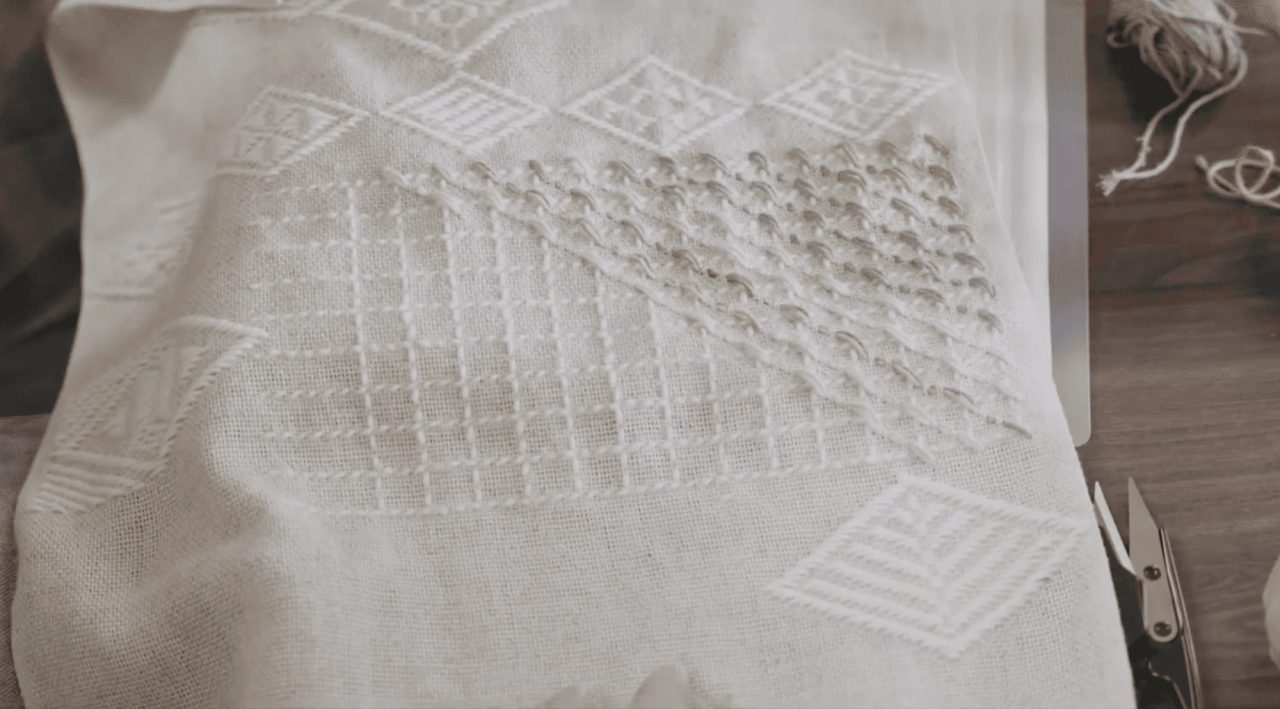
EP.83 · Nanbu Hishizashi · Aomori
Diamonds Against the Cold
In southern Aomori, winters were harsh. With only coarse hemp for clothing, farmers needed warmth and strength.
In southern Aomori, winters were harsh. With only coarse hemp for clothing, farmers needed warmth and strength. This is when women stitched layers of hemp with thread, sealing gaps and reinforcing the cloth. This became the origin of Nanbu Hishizashi , one of Japan’s three great embroidery traditions alongside Tsugaru Kogin and Shonai sashiko.
By the 1800s, these stitches evolved into diamond-shaped patterns. Counting even numbers across created wide, horizontal diamonds filled with motifs like plum blossoms, fish scales, and cat’s eyes, all patterns drawn from daily life.
With the Meiji-era railways also came colorful cotton and wool yarns evolving this craft even more. At its peak, over 400 patterns were practiced by artisans. Now, the types of patterns recognized exceed 900.
Creating these embroideries demands patience and precision. Each stitch is counted carefully, with mistakes immediately visible. Artisans often spend months completing a single apron or garment, with skill passed from mother to daughter through years of practice.
Today, artisans continue the tradition, sharing it through workshops and exhibitions, applying it to items like bags, ties, and masks for modern audiences.
Craft Chronicles reaches people who care about how things are actually made.
Sources
- www.youtube.com/watch?v=mPcerbGGfmc
- www.youtube.com/watch?v=Wf7715S0AVU
- www.youtube.com/watch?v=G_DX9WKKpNQ
- www.youtube.com/watch?v=_UhSqTRAvWo
- hishizashi.com/
- koginbank.com/about/about01/
- g.kyoto-art.ac.jp/reports/7183/
- www.pref.aomori.lg.jp/soshiki/sangyo/chikikigyo/aomori_dento-kogei_nanbuhishizashi.html
- hacchi.jp/programs2/amouyayoi_exhibition/
- visithachinohe.com/shopping/nanbuhisisasi/