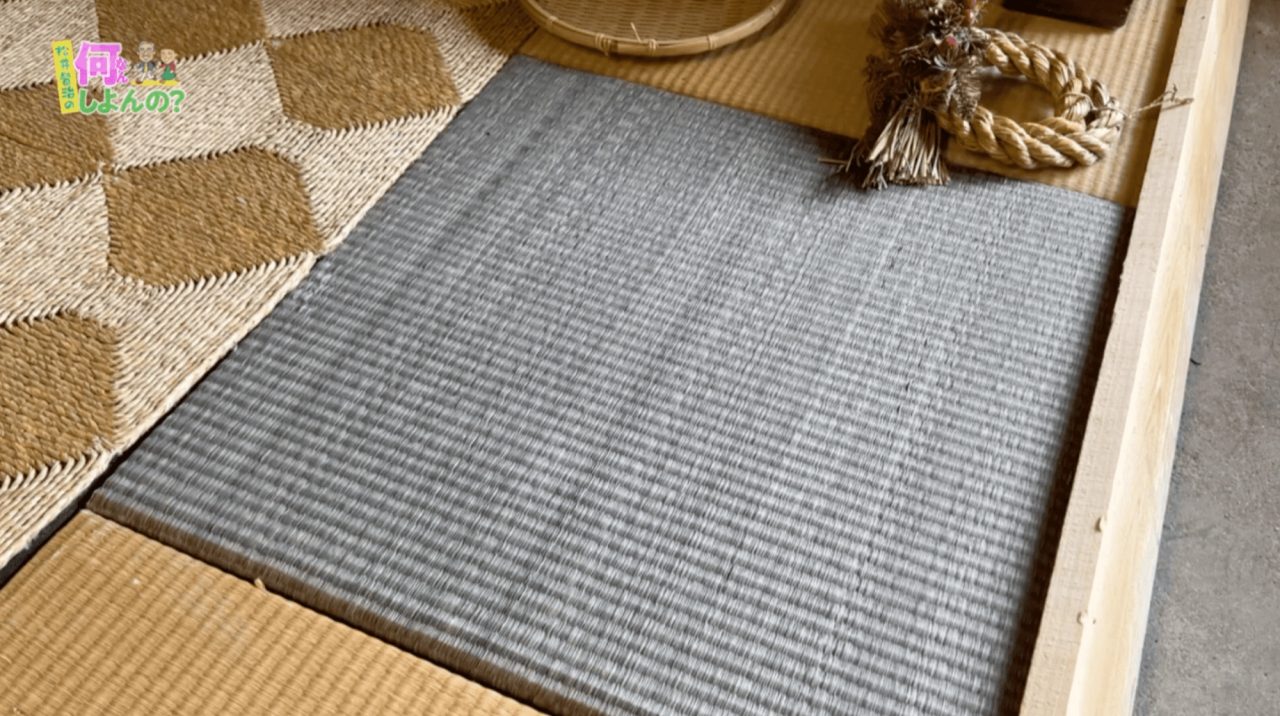
EP.46 · Shichitoui · Oita
A Grass Worth Smuggling
The story begins with a young merchant named Hashimoto Gorouemon, who encountered a stunning woven mat while on a trade trip to Satsuma.
The story begins with a young merchant named Hashimoto Gorouemon, who encountered a stunning woven mat while on a trade trip to Satsuma. Enchanted by the grass that was used, he risked everything to smuggle the seeds to his home inside a bamboo tube. From this, the Kunisaki regions production of Shichitoui began.
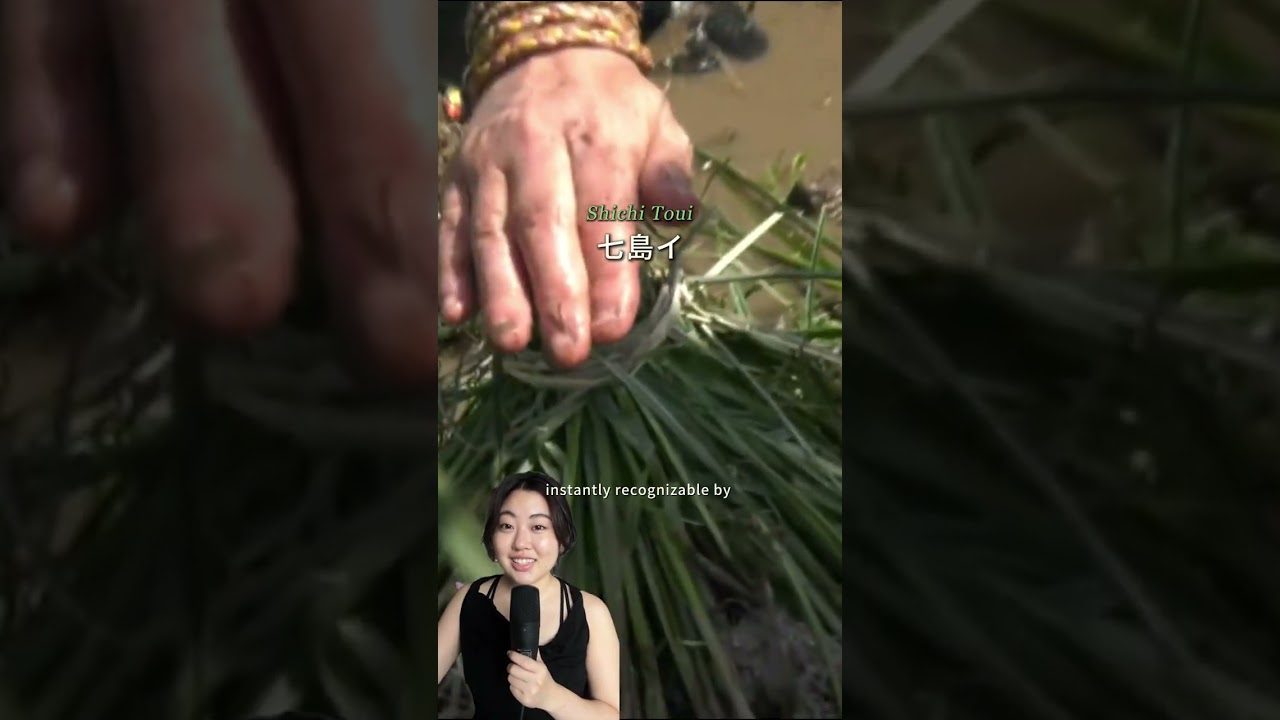
Shichitoui grass is instantly recognizable by its rigid, triangular stem, unlike the round-stemmed igusa used in most tatami. This sharp geometry is more than just a visual quirk; it gives Ryukyu tatami its signature strength, fire resistance, and crisp, dry texture.
However, as machines can’t handle its uneven fibers, every step from planting to harvesting to weaving is still done entirely by hand. After the summer harvest, the stems are split, sorted, and dried without the use of coloring. This preserves the vivid green hue and gives each piece a fresh, grassy aroma.
Finally, each strand is carefully hand-fed into a foot-operated loom, producing a tatami mat that carries the rhythm and breath of the artisan. Today, only a handful of artisans remain, preserving the tradition by handcrafting just two to four mats per day.
Craft Chronicles reaches people who care about how things are actually made.
Sources
- www.youtube.com/watch?v=u9Tp-lSoNhE
- www.youtube.com/watch?v=rfHe8ksuOY0
- www.youtube.com/watch?v=nfS2NlPl1x0
- www.youtube.com/watch?v=9aq-55lfOyk&t=1s
- www.youtube.com/watch?v=uKhKF8MN9OI
- www.youtube.com/watch?v=pX26ddqq1HY
- shitto.org/
- shitto.org/history.html
- www.maff.go.jp/j/seisan/tokusan/shititou.html
- oitaisan.com/heritage/七島イ/
- www.kunisaki-usa-giahs.com/en/news-column/meguru/1559/#:~:text=七島藺の歴史は,価値が高まっている。
- www.oita-aoki.com/七島藺のお話/
- www.city.kitsuki.lg.jp/material/files/group/14/7135_20517_misc.pdf
- www.city.kitsuki.lg.jp/material/files/group/14/7135_20518_misc.pdf
- www.daiwahouse.co.jp/shinrin/slowner/culture/article11.html