EP.122 · Tama Ori · Tokyo
The Capital of Mulberry
Silk weaving has been practiced in Hachioji (八王子), west of Tokyo, for centuries.
Silk weaving has been practiced in Hachioji (八王子), west of Tokyo, for centuries. Known as the "Capital of Mulberries" (桑都) for its thriving sericulture, the area developed into one of Japan’s major silk production centers, forming the roots of today’s Tamaori.
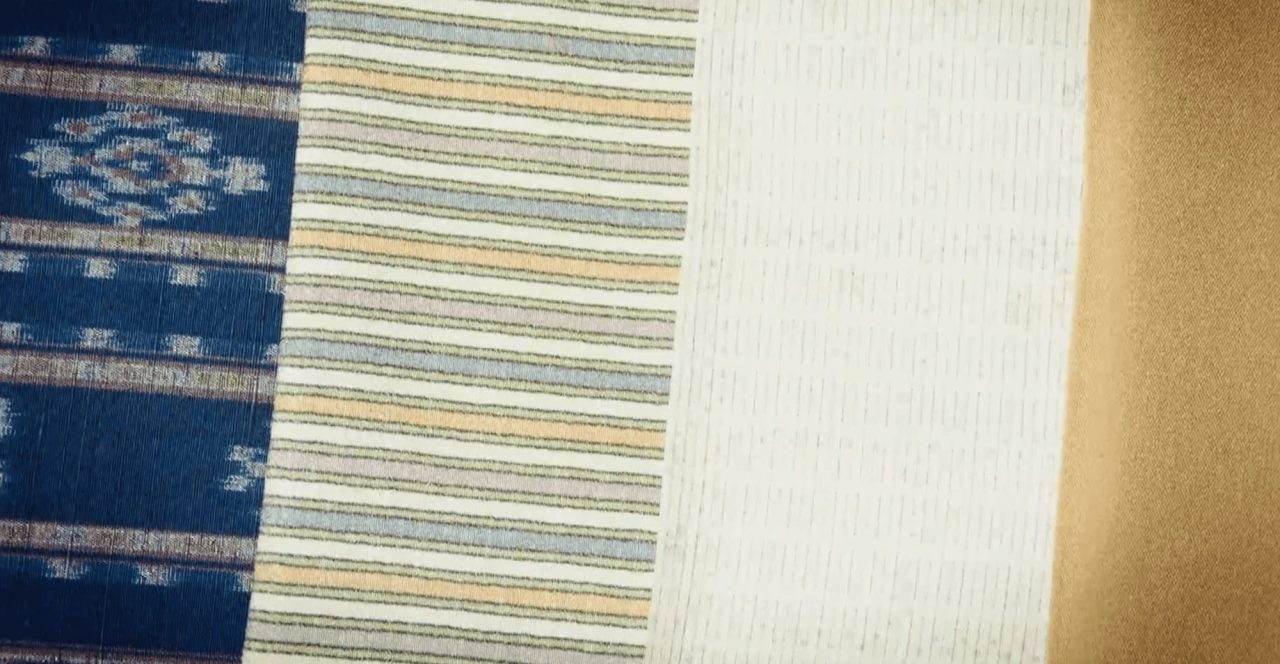
Unlike most Japanese textiles, Tamaori is not a single fabric but a collective craft made up of five weaving styles: Omeshi (御召) , Futsu (風通) , Tsumugi (紬) , Mojiri (綟り) , and Kawari‑tsuzure (変り綴) . Together they represent the full range of Hachioji’s weaving techniques, from the crisp wrinkles of Omeshi to the airy structure of Mojiri and the colorful designs of Kawari‑tsuzure.
The process begins with refining silk, designing patterns, and dyeing the threads before weaving. On the loom, more than one hundred warp threads may run through a single centimeter of fabric. Using both hands and feet, artisans carefully adjust tension as they weave, creating subtle variations unique to hand craftsmanship.
Production is highly collaborative, with a specialized network of craftspeople handling each stage from dyeing to finishing. Today, Tamaori has expanded beyond kimono into neckties, scarves, hats, and interior textiles, bringing Tokyo’s refined craft aesthetic into modern life.