EP.155 · Tsugaru Sakiori · Aomori
Tsugaru Sakiori: Japan’s Tradition of Upcycled Textiles
In frozen Aomori, old clothes became Japan’s most resilient craft. Discover Tsugaru Sakiori, the art of tearing discarded cotton to weave new life.
When Worn-out Cloth Begins Another Life: The Story of Tsugaru Sakiori
In the harsh winter climate of northern Aomori, cotton could not be cultivated. Far from being a common commodity, fabric was a precious resource saved, repaired, and cherished. From this necessity arose Tsugaru Sakiori (津軽裂織), a traditional Japanese craft that turned discarded, worn-out garments into durable, beautiful new textiles.
1. Born from Necessity on Northern Trading Ships
During the middle of the Edo period, cotton arrived in northern Japan via Kitamaebune trading ships. Because fresh cotton was scarce and expensive, Tsugaru fishermen and farmers couldn't afford to waste a single scrap.
When garments wore down past repair, locals tore the fabric into narrow strips, a practice known locally as Sakuri (サクリ). Scraps too small or fragile to tear by hand were snipped with Japanese shears into uniform strips roughly three millimeters wide.
2. The Weaving Process: How Sakiori is Made
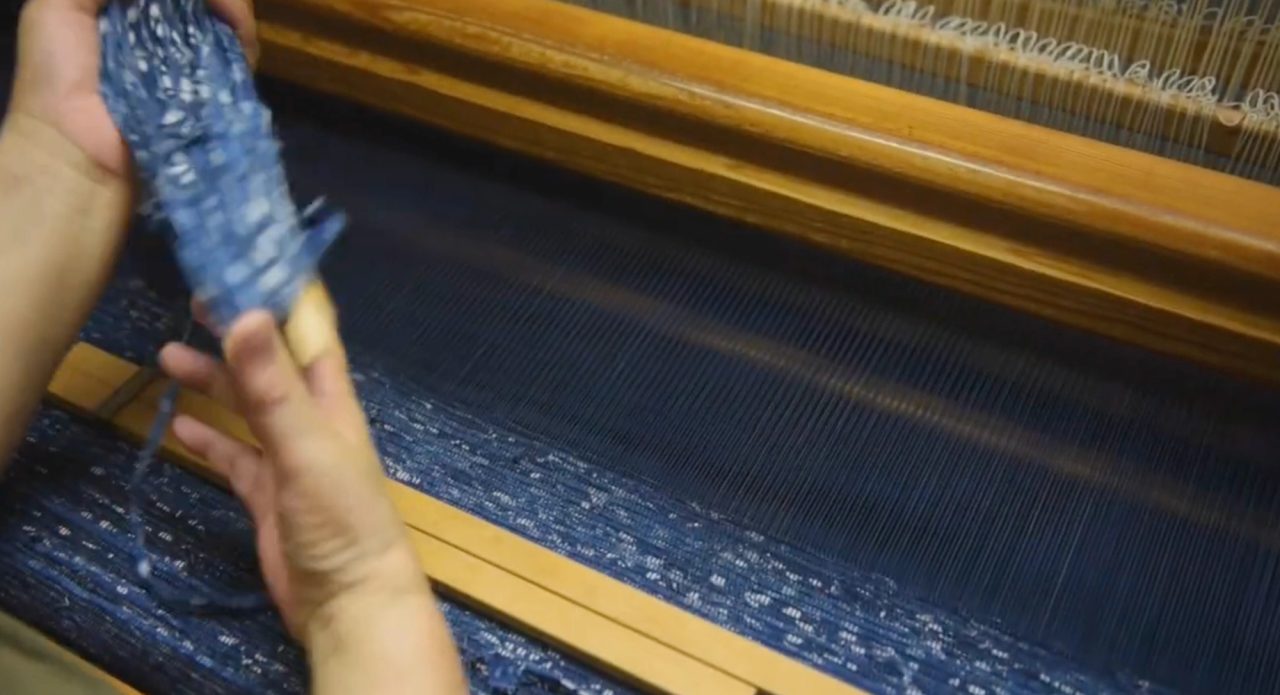
To weave Sakiori, artisans prepare warp threads (originally hemp, and later cotton or silk) stretched tight on a vertical loom frame. The torn cotton strips are then rolled into dense balls and used as the horizontal weft.
Precision Cutting: Snipping scraps finely ensures a soft, velvet-like pile on the surface.
Dense Packing: The weaver passes the fabric strips through the warp, beating them firmly into place with a reed.
Flexible Strength: Despite being packed tightly for warmth and wind resistance, the cloth was intentionally woven thin and pliable so workers could move freely.
Most historical pieces were dyed with rich indigo, serving as rugged daily workwear for fishermen along Aomori's coastline. A brand-new piece, with fresh dye and crisp patterns, was reserved for special occasions like seasonal festival days.
3. Disappearance and Revival: A Craft Saved by a Museum Case
With the introduction of modern rubber rainwear in the Taisho era, the practical need for Sakiori vanished. Within a few decades, production ground to a total halt, and the technique was almost completely forgotten in Tsugaru.
The craft’s revival came down to a single artifact: a faded indigo work coat resting in a museum display case, softened by decades of historical wear.
Artisan Asako Murakami discovered this garment and set out to decode its construction. Rebuilding the craft thread by thread, Murakami didn't just replicate the past, she modernized it:
Botanical Dyes: Introducing natural dyes made from local Aomori apple wood, beech, oak, and wild grapes.
Elevated Materials: Combining reclaimed Nebuta festival yukata strips with fine silk kimono cloth.
Complex Structures: Incorporating intricate weaving techniques like loop weave, float weave, and hikikaeshi.
In 2006, Murakami was officially certified as a Tsugaru Sakiori traditional craftsperson, cementing the rebirth of the art form.
4. Modern Collaborations and Regional Pairings
Today, Tsugaru Sakiori has transcended its origins as farm workwear to become a sought-after contemporary material for coats, bags, interior design, and art pieces.
Because its foundation is built on history, modern artisans frequently pair Sakiori with other traditional materials from the region:
Aomori Hiba Wood: Naturally aromatic and antimicrobial timber.
Akebi Vine Basketry: Hand-woven regional basketry techniques.
Wild Ezo Deer Hide: Untreated leather from Hokkaido that displays natural scars and creases, matching the weathered character of reclaimed cloth.
Note on Regional Craft: Aomori hosts two distinct sakiori traditions. While Tsugaru Sakiori originates from the western coast, Nanbu Sakiori hails from the eastern side of the prefecture, carrying its own unique heritage and techniques.
Incorporate Sakiori into Your Next Design Project
Are you working on a project in fashion, hospitality, interior design, or brand storytelling that calls for sustainable, history-rich Japanese textiles?
We work directly with craft workshops across Japan to facilitate custom material sourcing, design collaborations, and corporate gifting. Reach out to our team to discuss what’s possible.
Craft Chronicles reaches people who care about how things are actually made.
Sources
- www.youtube.com/watch?v=RbWEZe5OlQg
- www.youtube.com/watch?v=E6mewq7f2RA
- www.youtube.com/watch?v=V1XPaTzW--8
- www.youtube.com/watch?v=X7R_YDN67Cs
- www.youtube.com/watch?v=gySjhxcYHTQ
- www.youtube.com/watch?v=Y7NWqbTBsJw
- www.youtube.com/watch?v=Uoiwq3_olCM
- sakiori.jp/how/
- www.pref.aomori.lg.jp/soshiki/sangyo/chikikigyo/aomori_dento-kogei_tsugarusakiori.html
- www.kaitori-kimono.biz/topics/kimono-new-20160506c.html
- www.library.city.aomori.aomori.jp/aomoricity_history/trivia/001-/028.pdf
- www.iichi.com/contents/articles/UODUOYAW
- tesigotosenkablog.blogspot.com/2010/10/blog-post_2737.html
- www.city.hirosaki.aomori.jp/city_promotion/docs/39-42.pdf